Comparisons
Down to two tools? This settles it.
Two platforms, the same testing checklist, one verdict — plus the specific situations where the runner-up is actually the smarter buy for you. Every comparison starts with a fit-check, so you'll know which column you're in before the feature table.
Not sure which two to compare? Our free CRM comparison tool asks six questions and points you at the right head-to-head — or a best-for roundup if you are still browsing.
Still browsing? Take the CRM comparison quiz · Deciding between two tools we haven't covered yet? Request a comparison.
Why side-by-side answers beat a top-10 list
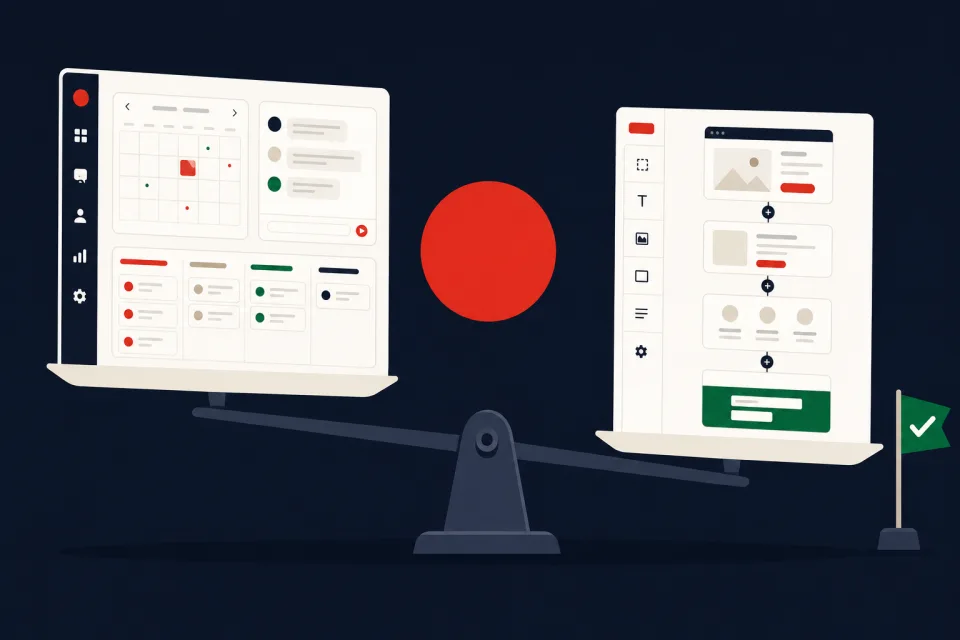
A side-by-side comparison tests two specific tools against the same checklist and gives you one clear recommendation — which answers a shortlist decision far better than a generic top-10 list can.
By the time you're comparing two specific tools, you need to know exactly where they differ on the features you'll actually use. So every comparison runs both platforms through the same checklist: we build the same funnel, wire the same automation, send the same SMS campaign, and connect the same calendar on both, then score the differences that survive contact with real work.
Each comparison names the tool we'd choose for the most common situation — and then lists the specific scenarios where the other one serves you better. If you fit one of those scenarios, buy the other tool. That's not a loophole; that's the entire point of the format.
Still deciding which two tools to shortlist? Start with our use-case roundups or the individual reviews. The scoring rubric behind every comparison is documented in how we review.
Comparisons also get re-tested. When one platform ships a major feature — a new automation builder, an AI assistant, a pricing change — we re-test the affected categories and update the recommendation if the gap has closed. Each comparison shows when it was last verified, so you're never reading an answer that was decided two product versions ago. If you spot something that's changed before we do, tell us and we'll re-check it.